Basmati rice glycemic index
Basmati rice has a glycemic index of 60, which is medium. A 150 g serving (about 1 cup cooked) has a glycemic load of 25 (high).
Also known as: white basmati
- Serving150 g
- Available carbs42 g
- Fiber0.6 g
- Sugars0.1 g
- Protein4 g
- Calories195 kcal
Serving: about 1 cup cooked.
What to know
Basmati is a long-grain, higher-amylose rice with a medium GI, lower than jasmine or sticky rice. Quick-cook and microwave basmati pouches tested slightly higher than regular basmati.
Glycemic load by portion size
GI stays the same whatever you eat, but glycemic load scales with the amount: eating twice as much doubles the effect on blood sugar.
| Amount | Available carbs | Glycemic load | |
|---|---|---|---|
| 50 g | 14 g | 8 | Low |
| 100 g | 28 g | 17 | Medium |
| 150 g · about 1 cup cooked | 42 g | 25 | High |
| 300 g · double serving | 83 g | 50 | High |
What the studies found
The value of 60 is the mean calculated by the authors of the International Tables of Glycemic Index (2021) across 21 studies. Results range from 43 to 84. That spread is normal: GI changes with variety, ripeness, cooking and processing, and between labs.
Each dot is one study. Green dots followed the ISO 26642 standard method.
- 43 · India 2014
- 50 · UK 2009
- 52 · India 2012
- 52 · UK 2005
- 54 · India 2014
- 56 · Singapore 2015
- 56 · Pakistan 2014
- 57 · Australia 2013
- 57 · UK 2005
- 59 · Pakistan 2003
- 60 · Singapore 2015
- 63 · Singapore 2015
- 63 · Australia 2011
- 64 · Pakistan 2014
- 65 · Pakistan 2005
- 66 · UK 2015
- 67 · Australia 2013
- 67 · UK 2005
- 69 · UK 2005
- 80 · UK 2009
- 84 · Qatar 2010
Basmati rice compared with other grains & rice
Lower-GI swaps
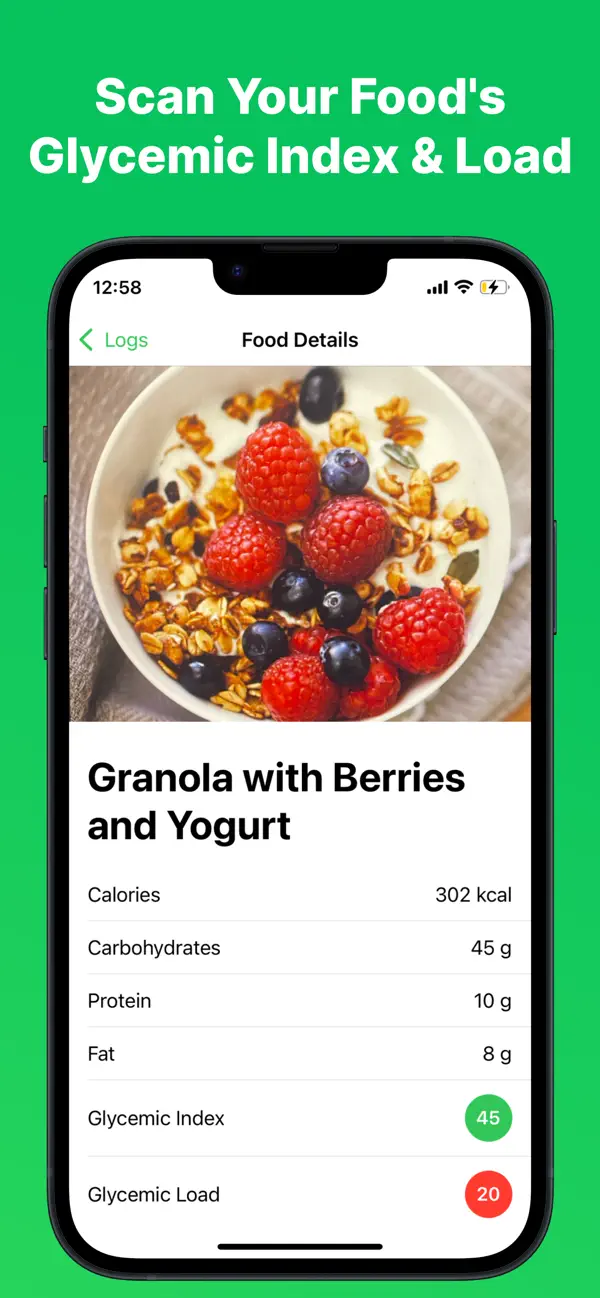
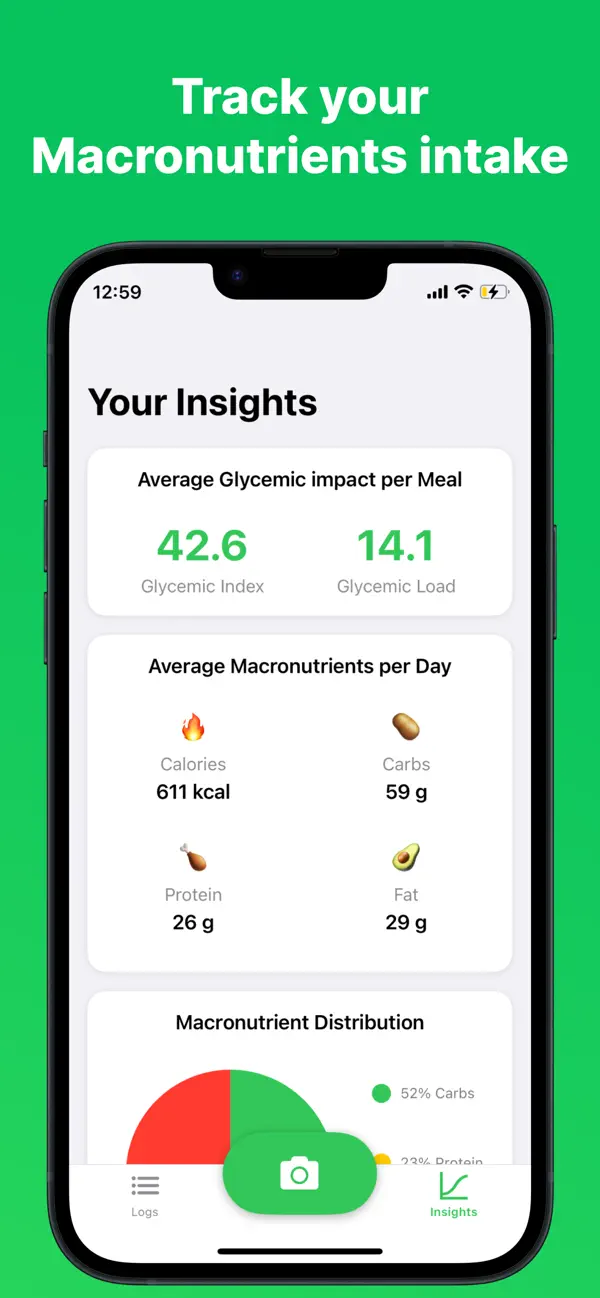
Know the glycemic index of any meal from a photo
Tables work for single foods. The app estimates the GI and glycemic load of your whole plate, with real portions.
- Scan your plate or just describe it
- GI, glycemic load, calories and macros
- An AI nutritionist that knows your meals

Frequently asked questions
Is basmati rice low glycemic?
No. With a GI of 60, basmati rice is in the medium range (56 to 69). Low GI is 55 or less.
What is the glycemic load of basmati rice?
A 150 g serving (about 1 cup cooked) has a glycemic load of 25, which is high. Glycemic load combines GI with the amount of carbohydrate in the portion: 10 or less is low, 11 to 19 medium and 20 or more high.
Can people with diabetes eat basmati rice?
With a GI of 60 and a high glycemic load per serving, basmati rice is best eaten in smaller portions alongside protein, fat or vegetables, or swapped for a lower-GI option. Everyone responds differently, so talk to your doctor or dietitian about your plan.
How many carbs are in basmati rice?
A 150 g serving has about 42 g of total carbohydrate, including 0.6 g of fiber, leaving 41.7 g of available carbohydrate (the part that raises blood sugar). Per 100 g: 28.2 g of carbohydrate.
Nutrition facts
| per 100 g | Serving (150 g) | |
|---|---|---|
| Calories | 130 kcal | 195 kcal |
| Carbohydrates | 28 g | 42 g |
| Available carbs | 28 g | 42 g |
| Fiber | 0.4 g | 0.6 g |
| Sugars | 0.1 g | 0.1 g |
| Protein | 2.7 g | 4 g |
| Fat | 0.3 g | 0.4 g |
Source: USDA FoodData Central, Rice, white, long-grain, regular, enriched, cooked (SR Legacy, FDC 168878). Available carbohydrate = total carbohydrate minus fiber.
Sources: Atkinson FS, Brand-Miller JC, Foster-Powell K, Buyken AE, Goletzke J. International tables of glycemic index and glycemic load values 2021: a systematic review. Am J Clin Nutr. 2021;114(5):1625–1632. USDA FoodData Central. How we calculate each value: Methodology & sources.
Data last reviewed 2026-09-29.