Cheese glycemic index
Cheese has no measurable glycemic index: a 30 g serving (1 slice) has only 1 g of available carbohydrate, so its glycemic load is about 0 and it barely raises blood sugar on its own.
Also known as: cheddar, hard cheese
- Serving30 g
- Available carbs1 g
- Fiber0 g
- Sugars0.1 g
- Protein6.9 g
- Calories121 kcal
Serving: 1 slice.
What to know
Hard cheeses contain almost no carbohydrate, so they have no measurable GI and a glycemic load of about zero.
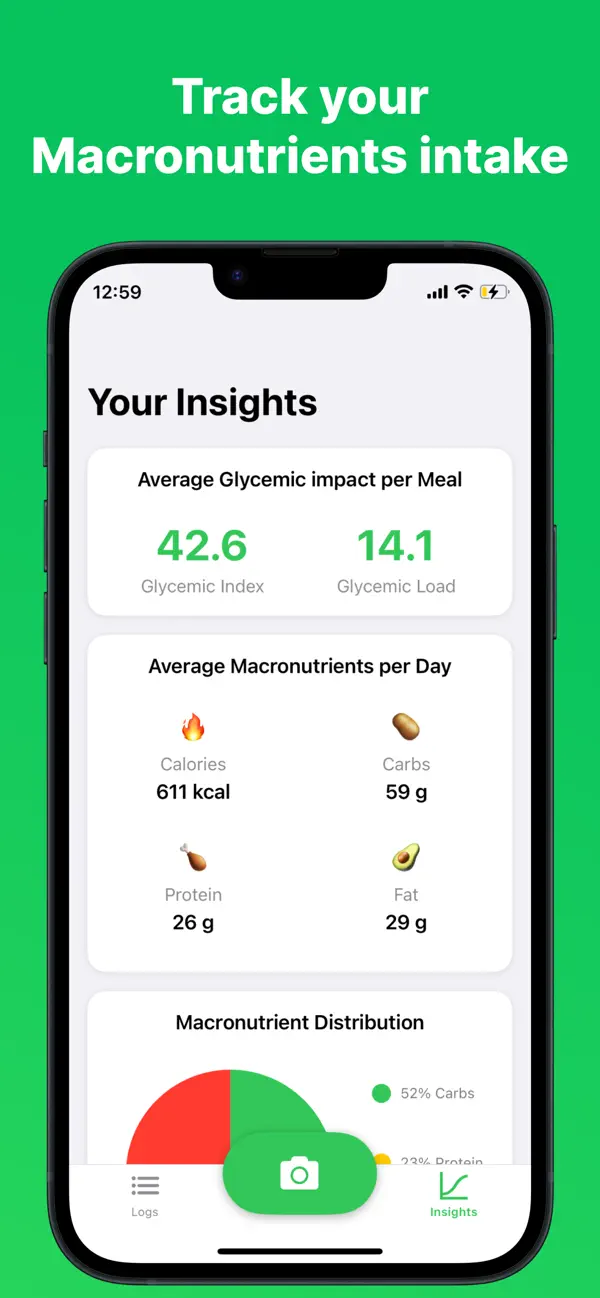
Know the glycemic index of any meal from a photo
Tables work for single foods. The app estimates the GI and glycemic load of your whole plate, with real portions.
- Scan your plate or just describe it
- GI, glycemic load, calories and macros
- An AI nutritionist that knows your meals


Frequently asked questions
Does cheese have a glycemic index?
Not a measurable one. GI can only be tested in foods with enough carbohydrate: the test needs a 25 or 50 g carbohydrate portion. Cheese has 3.4 g per 100 g, so its direct effect on blood sugar is minimal and its glycemic load is about 0.
Does cheese raise blood sugar?
Barely, on its own. What matters more is what you eat it with: bread, rice, potatoes, sauces or sugary drinks. Pairing carbohydrate foods with protein, fat or fiber tends to soften the rise.
How many carbs are in cheese?
A 30 g serving has about 1 g of total carbohydrate, including 0 g of fiber, leaving 1 g of available carbohydrate (the part that raises blood sugar). Per 100 g: 3.4 g of carbohydrate.
Nutrition facts
| per 100 g | Serving (30 g) | |
|---|---|---|
| Calories | 403 kcal | 121 kcal |
| Carbohydrates | 3.4 g | 1 g |
| Available carbs | 3.4 g | 1 g |
| Fiber | 0 g | 0 g |
| Sugars | 0.5 g | 0.1 g |
| Protein | 23 g | 6.9 g |
| Fat | 33 g | 10 g |
Source: USDA FoodData Central, Cheese, cheddar (Includes foods for USDA's Food Distribution Program) (SR Legacy, FDC 173414). Available carbohydrate = total carbohydrate minus fiber.
Sources: Atkinson FS, Brand-Miller JC, Foster-Powell K, Buyken AE, Goletzke J. International tables of glycemic index and glycemic load values 2021: a systematic review. Am J Clin Nutr. 2021;114(5):1625–1632. USDA FoodData Central. How we calculate each value: Methodology & sources.
Data last reviewed 2026-09-29.