Greek yogurt glycemic index
Greek yogurt has a glycemic index of 24, which is low. A 200 g serving (1 cup) has a glycemic load of 2 (low).
Also known as: strained yogurt, Greek-style yogurt
- Serving200 g
- Available carbs8 g
- Fiber0 g
- Sugars8 g
- Protein18 g
- Calories194 kcal
Serving: 1 cup.
What to know
Straining removes much of the whey and lactose, so Greek yogurt has less sugar and roughly twice the protein of regular yogurt, with a very low glycemic load.
Glycemic load by portion size
GI stays the same whatever you eat, but glycemic load scales with the amount: eating twice as much doubles the effect on blood sugar.
| Amount | Available carbs | Glycemic load | |
|---|---|---|---|
| 50 g | 2 g | <1 | Low |
| 100 g | 4 g | <1 | Low |
| 200 g · 1 cup | 8 g | 2 | Low |
| 400 g · double serving | 16 g | 4 | Low |
What the studies found
The value of 24 is the median of 2 published measurements in the International Tables of Glycemic Index (2021). Results are fairly consistent (12 to 36).
Each dot is one study. Green dots followed the ISO 26642 standard method.
- 12 · Australia 2004
- 36 · UK 2005
Greek yogurt compared with other dairy & plant milks
Similar low-GI foods
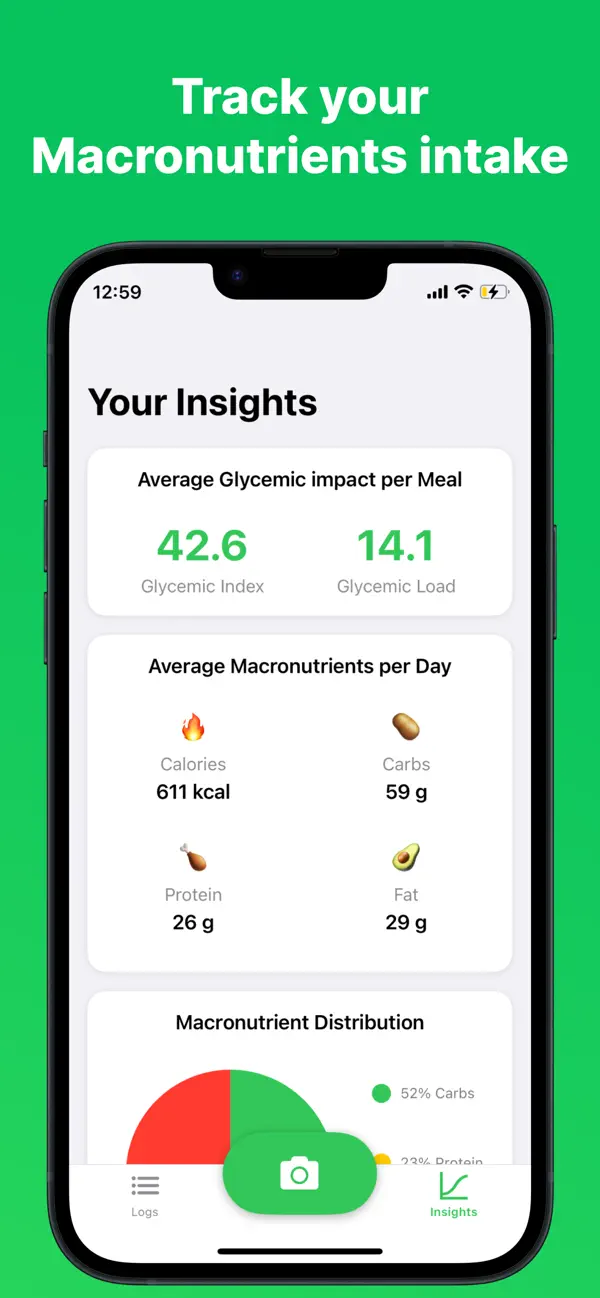
Know the glycemic index of any meal from a photo
Tables work for single foods. The app estimates the GI and glycemic load of your whole plate, with real portions.
- Scan your plate or just describe it
- GI, glycemic load, calories and macros
- An AI nutritionist that knows your meals


Frequently asked questions
Is greek yogurt low glycemic?
Yes. With a GI of 24, greek yogurt is in the low range (55 or less).
What is the glycemic load of greek yogurt?
A 200 g serving (1 cup) has a glycemic load of 2, which is low. Glycemic load combines GI with the amount of carbohydrate in the portion: 10 or less is low, 11 to 19 medium and 20 or more high.
Can people with diabetes eat greek yogurt?
With a GI of 24 and a low glycemic load per serving, greek yogurt usually fits a diabetes-friendly diet in normal portions. Everyone responds differently, so talk to your doctor or dietitian about your plan.
How many carbs are in greek yogurt?
A 200 g serving has about 8 g of total carbohydrate, including 0 g of fiber, leaving 8 g of available carbohydrate (the part that raises blood sugar). Per 100 g: 4 g of carbohydrate.
Nutrition facts
| per 100 g | Serving (200 g) | |
|---|---|---|
| Calories | 97 kcal | 194 kcal |
| Carbohydrates | 4 g | 8 g |
| Available carbs | 4 g | 8 g |
| Fiber | 0 g | 0 g |
| Sugars | 4 g | 8 g |
| Protein | 9 g | 18 g |
| Fat | 5 g | 10 g |
Source: USDA FoodData Central, Yogurt, Greek, plain, whole milk (SR Legacy, FDC 171304). Available carbohydrate = total carbohydrate minus fiber.
Sources: Atkinson FS, Brand-Miller JC, Foster-Powell K, Buyken AE, Goletzke J. International tables of glycemic index and glycemic load values 2021: a systematic review. Am J Clin Nutr. 2021;114(5):1625–1632. USDA FoodData Central. How we calculate each value: Methodology & sources.
Data last reviewed 2026-09-29.